Born in the late 18th century as a reaction against Enlightenment rationalism, Romanticism put emotion at the heart of art. Its origins, painters, key works and influence.
Artblr··5 min read·
In short
Romanticism is a movement that emerged in Europe in the late 18th century as a reaction against Enlightenment rationalism. It favours emotion and subjectivity. In painting, it is embodied by Géricault, Delacroix, Friedrich, Turner and Goya, and it also shaped literature and music.
By Marie-Andrée Boulais, updated by the Artblr team
Romanticism is not only a revolutionary movement or a literary artistic current. It can also be defined as a pictorial style that refers to:
It is not about using reason to paint, but rather about striving toward subjectivity and expressing emotions. Romanticism draws on:
individualistic art,
the Middle Ages,
exoticism,
nature,
contemporary literature.
It evokes:
freedom,
desire,
the imagination,
spirituality.
If Romanticism could be given only one word, “to feel” would be the appropriate term.
Where does Romanticism come from?
Romanticism emerged toward the end of the 18th century, notably in Germany and Great Britain. It arose largely as a reaction against the rationalism of the Enlightenment: where the Enlightenment relied on reason, the Romantics valued emotion, intuition and the imagination. In Germany, it drew on idealist philosophy, notably that of Friedrich Schelling. Its influence then spread throughout Europe and inspired many renowned artists, from France to Germany, by way of the United Kingdom and the United States.
At first, the movement was essentially revolutionary, political and literary. In the wake of the French Revolution, European peoples were grappling with authoritarian regimes and championed an ideal of democratic freedom. Romantic artists, for their part, were imbued with a deep desire for renewal. Indeed, this was the era of the Industrial Revolution, and mechanization did not mean progress for everyone. Artists feared losing the bond that connected them to nature, so they depicted landscapes in their canvases.
They also sought to break with academic rules and rejected the Greco-Roman models of Classicism. Gone were the ideals of beauty inspired by Antiquity, which pursued line and rationality. Romantic painting no longer sought to represent reality as it is, but rather to express feelings through imaginary and fanciful elements. Ruins and relics of the past, especially those of the Middle Ages, also fed their imagination and their reflections on the passage of time.
How is Romanticism represented in painting?
In painting, we can see that the artist’s subjectivity lies at the heart of the creation. This subjectivity, however, is not synonymous with well-being. Indeed, Romanticism embodies the turmoil of feelings, violence and drama. Its main subjects are tormented and reveal a deep malaise. Corpses, madness and the violence of human relationships hold a prominent place in Romantic painting.
In reaction to the industrial movement, landscape is increasingly depicted on canvas, but in a dark way. Painters portray chasms, storms and shipwrecks. The presence of death is brought to the fore, and the morbid, nightmarish side is exposed.
The diagonal is favoured to heighten the drama, as can be seen in Théodore Géricault’s canvas The Raft of the Medusa, completed in 1818-1819. A large diagonal runs across the canvas from left to right, up to the top of the figure. Perspective is barely present, and structuring the canvas is no longer the aim. Colour also takes precedence over drawing and is used to create the outlines. Luminosity is emphasized, notably through chiaroscuro.
Emblematic work of the Romantic movement
The emblematic painting of Romanticism is undoubtedly The Raft of the Medusa by Théodore Géricault, painted in 1818-1819. The artist is said to have found his inspiration in the wreck of a French ship that made headlines under Louis XVIII in 1816. Géricault liked to tackle political and military subjects and, through Romanticism, he found a way to show his subjectivity toward events.
The scene reveals the turmoil of the castaways, abandoned by the French navy and prey to death, anguish and agony. One can sense the macabre atmosphere that pierces through the canvas and the distress of the figures, left to fend for themselves. Géricault also denounces the king’s indifference and the delay of the rescue in the face of this tragedy.
The great Romantic painters
Beyond Géricault, several artists left their mark on Romantic painting. In Germany and the United States in particular, painters focused on the relationship between human beings and nature, giving a special place to landscape.
Caspar David Friedrich
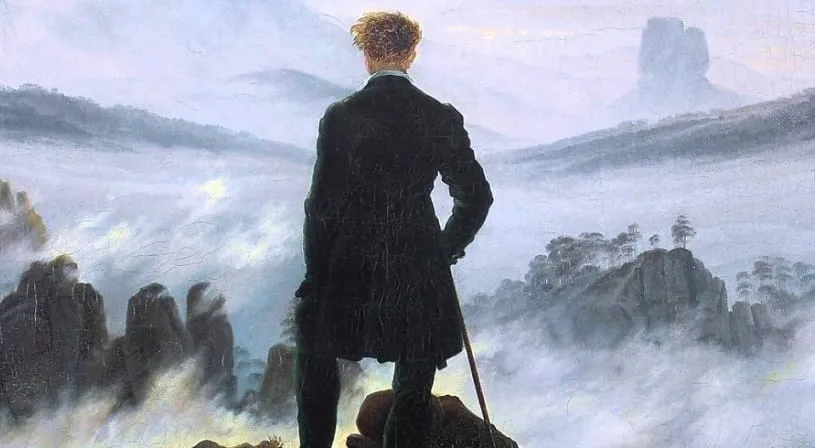
Wanderer above the Sea of Fog, by Caspar David Friedrich
Image via http://projectartistx.com
The German painter Caspar David Friedrich is one of the great figures of Romantic landscape painting. In Wanderer above the Sea of Fog (c. 1818), a figure seen from behind faces the immensity of nature: an image of the sublime dear to the Romantics.
J. M. W. Turner
The British painter J. M. W. Turner depicted nature at its most violent: storms, shipwrecks and turbulent skies, where light and colour prevail over drawing.
Eugène Delacroix and Antoine-Jean Gros
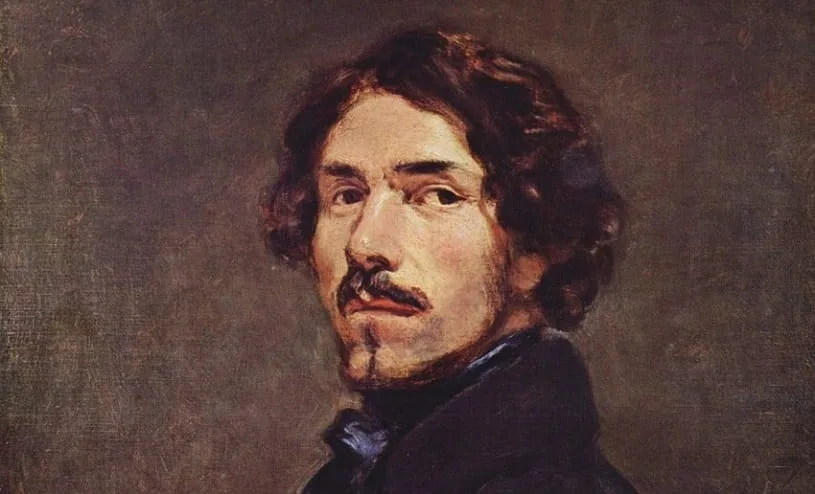
Portrait of Eugène Delacroix
Image via https://www.artspace.com
Eugène Delacroix is the leading figure of Romantic painting in France: in his work, colour and movement take precedence over line. Before him, Antoine-Jean Gros, a French painter of the Napoleonic era, was already emphasizing emotional intensity and human suffering, paving the way for Romanticism.
Francisco Goya
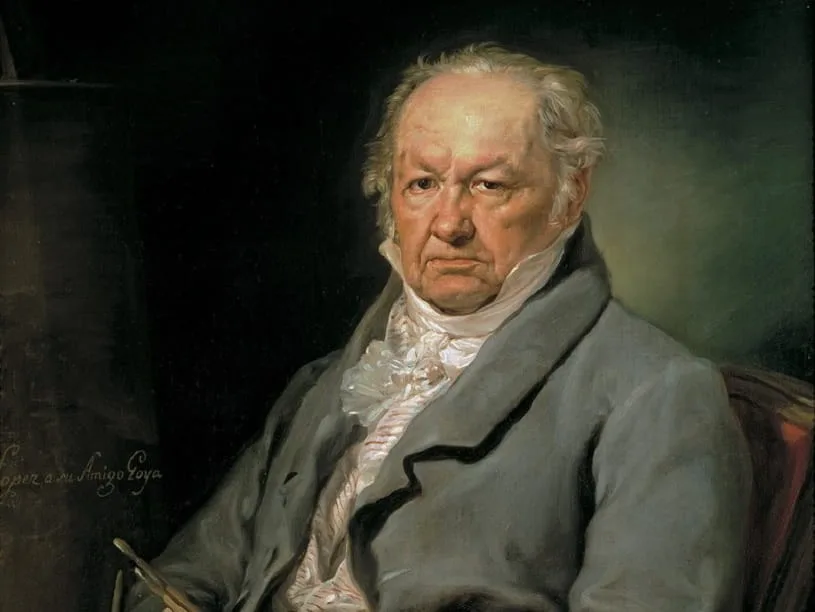
Portrait of Francisco de Goya
Image via wikimedia.org
The Spanish painter Francisco Goya explored the dark side of human nature. His Black Paintings (c. 1819-1823), a series of scenes painted directly on the walls of his house near Madrid, show the nightmarish forces that haunt human existence. Painted for himself rather than for the public, they now rank among the most striking works of the Romantic era.
William Blake
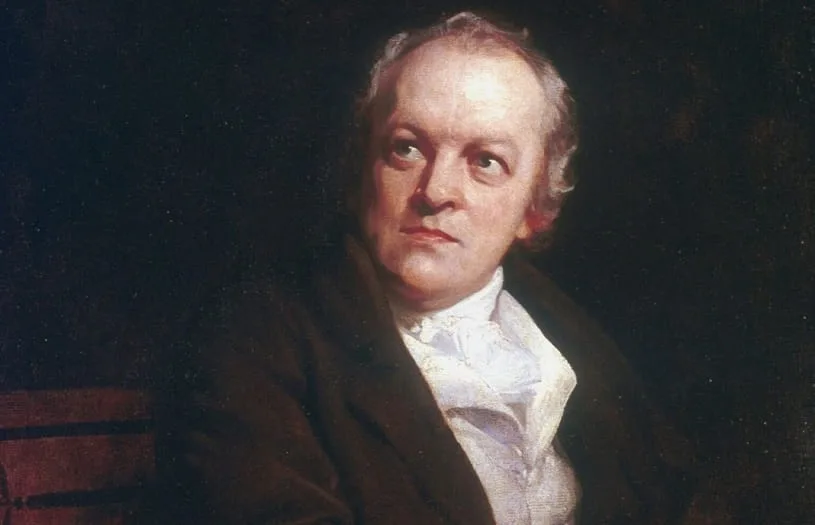
Portrait of William Blake
Image via https://www.poetryfoundation.org
In England, William Blake, both poet and painter, created a visionary world steeped in spirituality and imagination. Along with Goya, he is often considered a forerunner of Romanticism in the visual arts.
Romanticism in literature
At first, Romanticism was largely a literary movement. In poetry as in the novel, Romantic writers focused on emotions and the inner world. They celebrated nature, the imagination, beauty and the individual, and were often wary of rationalism and industrialization. Their style, rich in images and symbols, sought to suggest rather than to state things plainly.
Romanticism in music
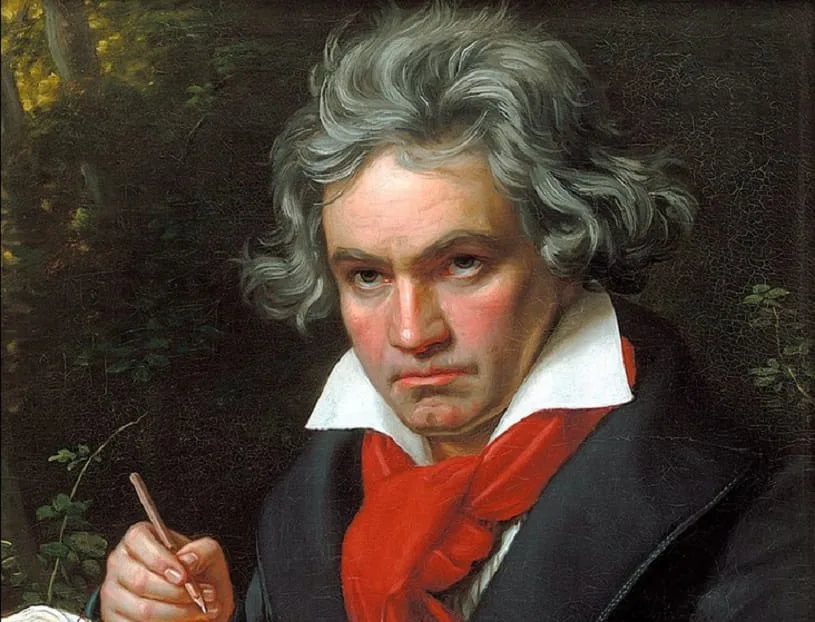
Portrait of Ludwig van Beethoven
Image via wikipedia.org
In music, the Romantic period roughly spans the 19th century. Composers moved away from the stricter forms of the Classical era to express emotions more freely. Ludwig van Beethoven, a transitional figure between Classicism and Romanticism, paved the way for this new sensibility. Romanticism thus brought music, literature and the visual arts closer together.
The legacy of Romanticism
As the first artistic movement to express the artist’s subjectivity, Romanticism marks the beginnings of modern art. It would later be followed by Impressionism, which was rejected by the Academy and opened the door to many avant-garde movements in 20th-century art.
Frequently asked questions
What is Romanticism in art?
Romanticism is a movement that values subjectivity and emotion over reason. In painting, it explores the morbid, the sublime, nightmares and melancholy, and evokes freedom, desire, the imagination and spirituality.
When and where did Romanticism begin?
Romanticism appeared toward the end of the 18th century, notably in Germany and Great Britain, as a reaction against Enlightenment rationalism. It then spread throughout Europe and to the United States.
What are the characteristics of Romantic painting?
Romantic painting puts the artist’s subjectivity and drama first: tormented subjects, dark landscapes with chasms, storms and shipwrecks, large diagonals, colour that prevails over drawing, and chiaroscuro.
Who are the great Romantic painters?
Leading Romantic painters include Théodore Géricault, who painted The Raft of the Medusa (1818-1819), Eugène Delacroix, Caspar David Friedrich, J. M. W. Turner and Francisco Goya, known for his Black Paintings.
Did Romanticism influence literature and music?
Yes. Romanticism was at first largely literary: writers celebrated nature, the imagination and the inner world. In music, the Romantic period roughly spans the 19th century, with Beethoven as a transitional figure from Classicism.
Romanticism: Origins, Painters, Works and Influence | Artblr
 Art historyExploring Modern Art Movements in Painting: A Journey through Revolutionary ArtExpressionism, Cubism, abstraction, Surrealism, Abstract Expressionism and Pop Art: a tour of the movements that broke with convention in 20th-century painting.May 27, 2024
 Art history20 Famous Landscape PaintingsFrom Bruegel to Paul Klee, by way of Monet, Hokusai and Van Gogh: 20 famous landscape paintings that have captivated art lovers through the centuries.October 12, 2018
 Art historyCaravaggio: biography, facts and famous paintingsBrawler, exile and master of chiaroscuro: the turbulent life of Caravaggio, his major paintings and his decisive influence on Baroque art.October 11, 2018