It's not yet Uhuru (Freedom)
Canvas, Others · 2017 521 views
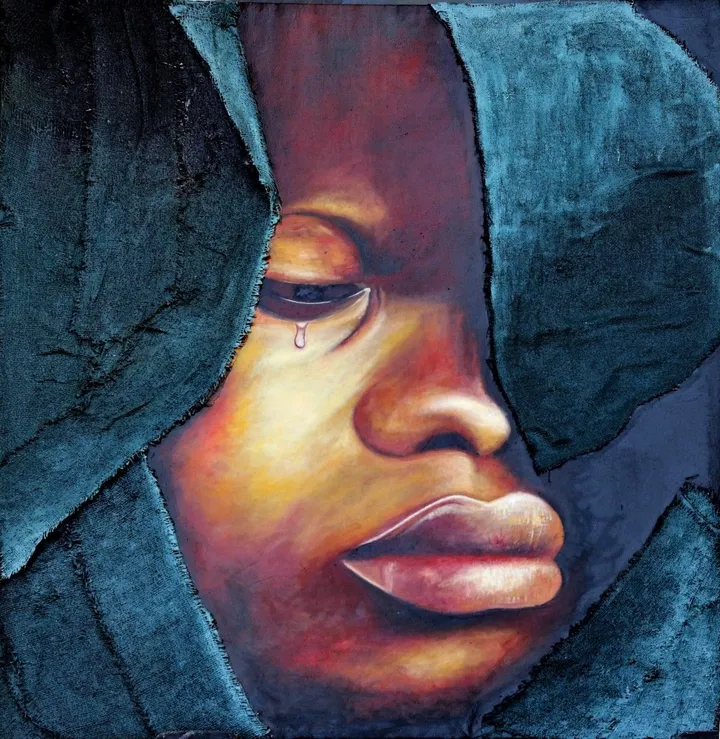
This is the side view of a face. There are tears dropping. The locked mouth means restriction on your freedom of speech. You can’t say the things that you want to say, to speak out against injustices you see or feel. Or you can but no one seems to hear you. The mind is also locked. Its thinking doesn’t surpass its environment. All it can think about is what is right in front of you. The Nigerian government has made it difficult for the common man to wake up and think he can be president. The leadership of this country is programmed to recycle – you need to know someone who knows someone. It’s the same people and their families who get in. It’s also hard to imagine being successful beyond your present situation, because the ones that are supposed to help us – bosses, professors, leaders – take advantage of you and keep you down. So our minds can be locked – we think we can’t do it. The lock and chain at the bottom represent lack of freedom of movement. The legs are chained. There are places where a common man cannot go to or cannot be seen in. For example, it’s very difficult for the average person to get into university. Even if you score a very high score on your national entrance exams, you still have to know someone, or be able to pay bribes before you can be found in a university. This keeps young people stagnant. You don’t move because you can’t pay or you don’t know anyone in the system you are trying to excel in. The three locks are three problems we wake up with and find ourselves in as people in Nigeria and in Africa. It’s easy to let our problems weigh us down and suppress us. But we have the key. We don’t always see it. We let our problems weigh us down and suppress us. We don’t always see it because we are crying. We can just see the locks. But it is there. The key is that thing inside us that helps us unlock our mouth, mind and legs, to let us move and speak and think even in a place where that is so difficult. It is faith. It is hope. It is the power that everyone has inside them to choose to change their situation for the better, in big ways or small. It’s optimism, believing that you can do it. Prayer helps us see the key.
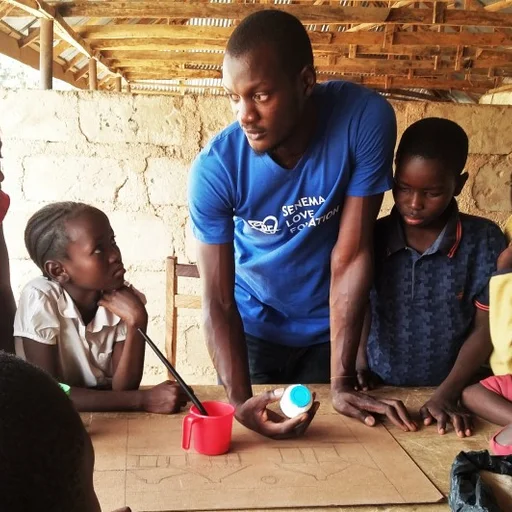
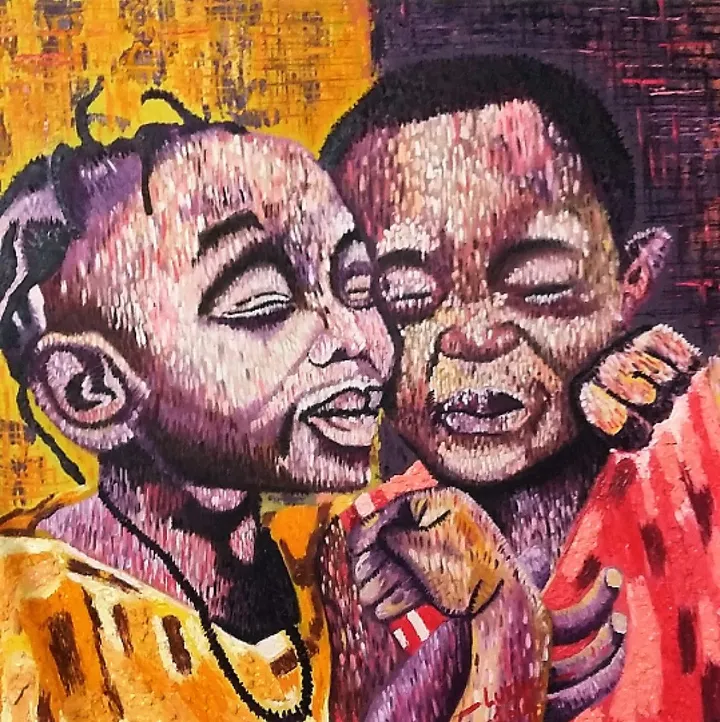
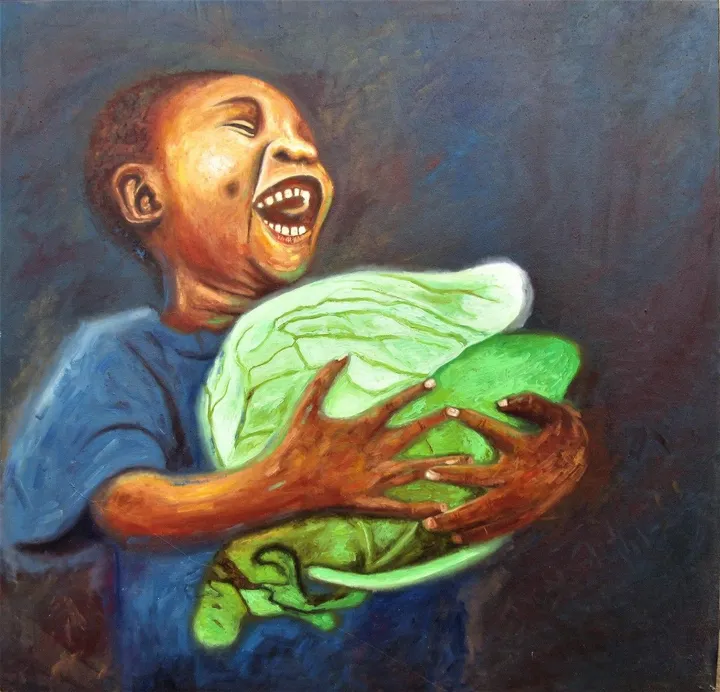
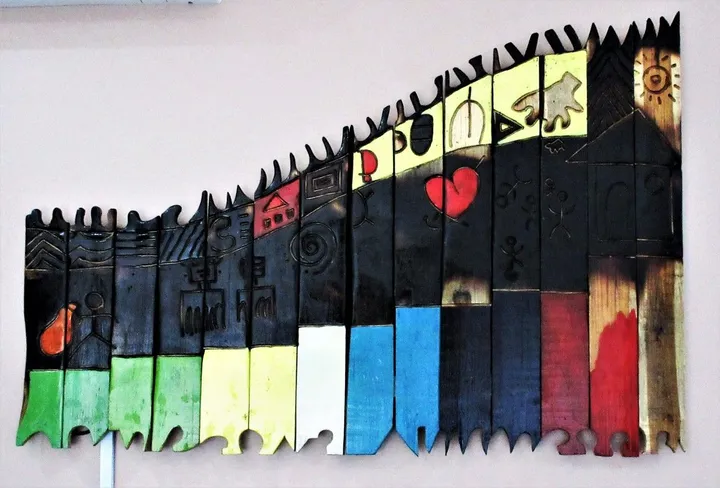
Many peacebuilding and development professionals work from their offices for governments or NGOs. Emerging artist Luka Chohu (also known as Lucho) works out of his own small compound in the community of Angwan Juma’a, Jos, Nigeria. This is a place where people “hustle” from morning till night to provide for their families – a place where art is generally not encouraged as a viable career path. To be sure, this artist does his fair share of hustling. But in between, he finds time to stretch old sheets over hand-made wooden frames to engage in his own form of peacebuilding and development work. From his small studio, Lucho fuses his artistic talent with his passion for social justice, to communicate the joys and challenges of everyday life in Nigeria; promote peaceful coexistence; and develop the capacities of those around him. His interest in art began in secondary school: “I always had a story to tell. But because I was not good with words or numbers, there was no way for me to tell it.” He therefore began using paint to express his own experiences and feelings. Following secondary school, Lucho moved to the capital to understudy Abuja-based artist, Kelvin Ubani. He then began using his new skills to move his art into broader themes of social justice, inter-identity peacebuilding and the beauty of Nigerian cultures. The purpose of Lucho’s work is twofold. First, using various media, his own art beautifully and honestly presents the paradoxes, joys and challenges of everyday life in Nigeria. It acts as means for himself and others to step back from the daily “hustle,” make sense of what is, and imagine what could be. In the end, what is produced are pieces with both aesthetic value and the ability to communicate such realities to both local and international audiences. Second, Lucho dreams of also using his talent to increase the creative and communicative capacities of others, particularly children in Jos who cannot access proper education, either because of displacement or poverty. Through volunteer work with local NGOs and schools, he has begun gaining experience in this area creating programs for internally displaced and local children learn how to use art to express and value themselves. Truly, Lucho lives as an artist, a development worker, and a peacebuilder.